Service Design

Citivise

A community-driven platform for reporting and resolving city issues

Client

Dubstech Protothon 2025

Duration

May 10-11, 2025 (34 Hours)

Tools

Figma, FigJam, Figma Slides

My Role

Competitor analysis, ideation, user flows, wireframing, low- and high-fidelity prototyping

Challenge

Modern cities suffer from fragmented, opaque issue-reporting systems. Residents don’t know where or how to report problems, while municipalities receive duplicate, vague, and poorly scoped complaints across disconnected channels. The lack of visibility into progress erodes public trust.

oPportunity

Design a citizen-facing mobile app that centralizes reporting, prevents duplicates, and visibly communicates progress, without requiring a government-side workflow redesign.
Service Design

Citivise

A community-driven platform for reporting and resolving city issues

Client

Dubstech Protothon 2025

Duration

May 10-11, 2025 (34 Hours)

Tools

Figma, FigJam, Figma Slides

My Role

Competitor analysis, ideation, user flows, wireframing, low- and high-fidelity prototyping

Challenge

Modern cities suffer from fragmented, opaque issue-reporting systems. Residents don’t know where or how to report problems, while municipalities receive duplicate, vague, and poorly scoped complaints across disconnected channels. The lack of visibility into progress erodes public trust.

oPportunity

Design a citizen-facing mobile app that centralizes reporting, prevents duplicates, and visibly communicates progress, without requiring a government-side workflow redesign.
Service Design

Citivise

A community-driven platform for reporting and resolving city issues

Client

Dubstech Protothon 2025

Duration

May 10-11, 2025 (34 Hours)

Tools

Figma, FigJam, Figma Slides

My Role

Competitor analysis, ideation, user flows, wireframing, low- and high-fidelity prototyping

Challenge

Modern cities suffer from fragmented, opaque issue-reporting systems. Residents don’t know where or how to report problems, while municipalities receive duplicate, vague, and poorly scoped complaints across disconnected channels. The lack of visibility into progress erodes public trust.

oPportunity

Design a citizen-facing mobile app that centralizes reporting, prevents duplicates, and visibly communicates progress, without requiring a government-side workflow redesign.
Service Design

Citivise

A community-driven platform for reporting and resolving city issues

Client

Dubstech Protothon 2025

Duration

May 10-11, 2025 (34 Hours)

Tools

Figma, FigJam, Figma Slides

My Role

Competitor analysis, ideation, user flows, wireframing, low- and high-fidelity prototyping

Challenge

Modern cities suffer from fragmented, opaque issue-reporting systems. Residents don’t know where or how to report problems, while municipalities receive duplicate, vague, and poorly scoped complaints across disconnected channels. The lack of visibility into progress erodes public trust.

oPportunity

Design a citizen-facing mobile app that centralizes reporting, prevents duplicates, and visibly communicates progress, without requiring a government-side workflow redesign.
Final prototype

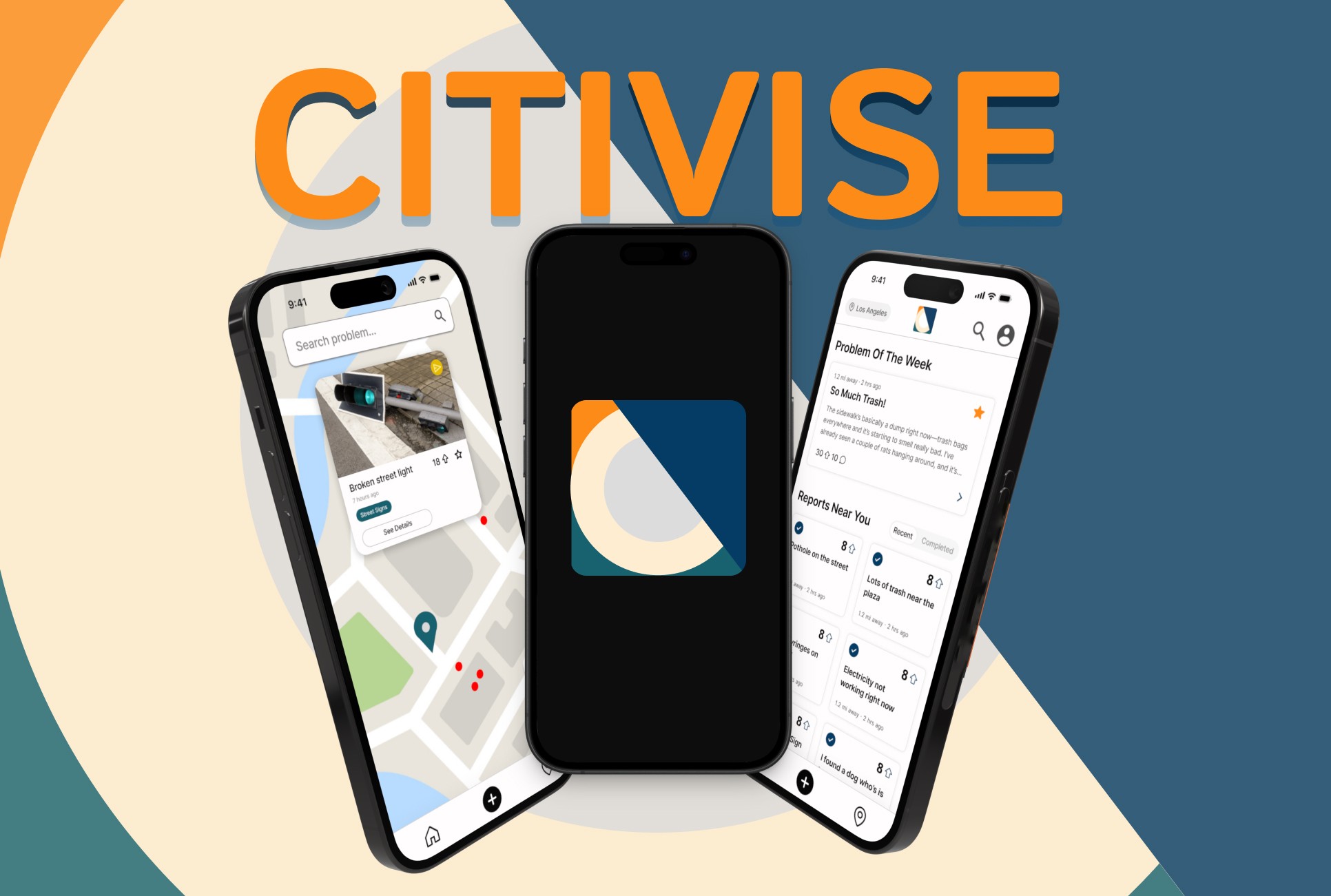
Citivise is a citizen-facing app built around three pillars shown in our pitch: guided reporting, online interactions + status updates, and a map of local reports. Features included:

  • Report city issues with photos, geolocation, and clear categorization

  • View and engage with issues reported by others via map and feed views

  • Track resolution status with visible timelines, updates, and before/after proof

  • Share resolved and unresolved reports to drive civic awareness


We framed the story through “Jessica,” a resident trying to report cleanliness/safety issues and stay informed about affected areas.

Research

We started by reviewing the provided prompt + constraints, then scanned 311-style competitors and public feedback patterns to quickly understand where existing reporting tools fail. The synthesis converged into the same three user questions we used to anchor our solution:

  • “How can I report and have my voice be heard?”

  • “How do I stay updated about my report?”

  • “How can I find out what issues are affecting my community?”

Key Focus Areas

This is less a “report creation” problem and more a quality + transparency loop problem. If submissions aren’t structured, nothing happens. If updates aren’t visible, users disengage. If discovery isn’t easy, people feel unsafe and uninformed.

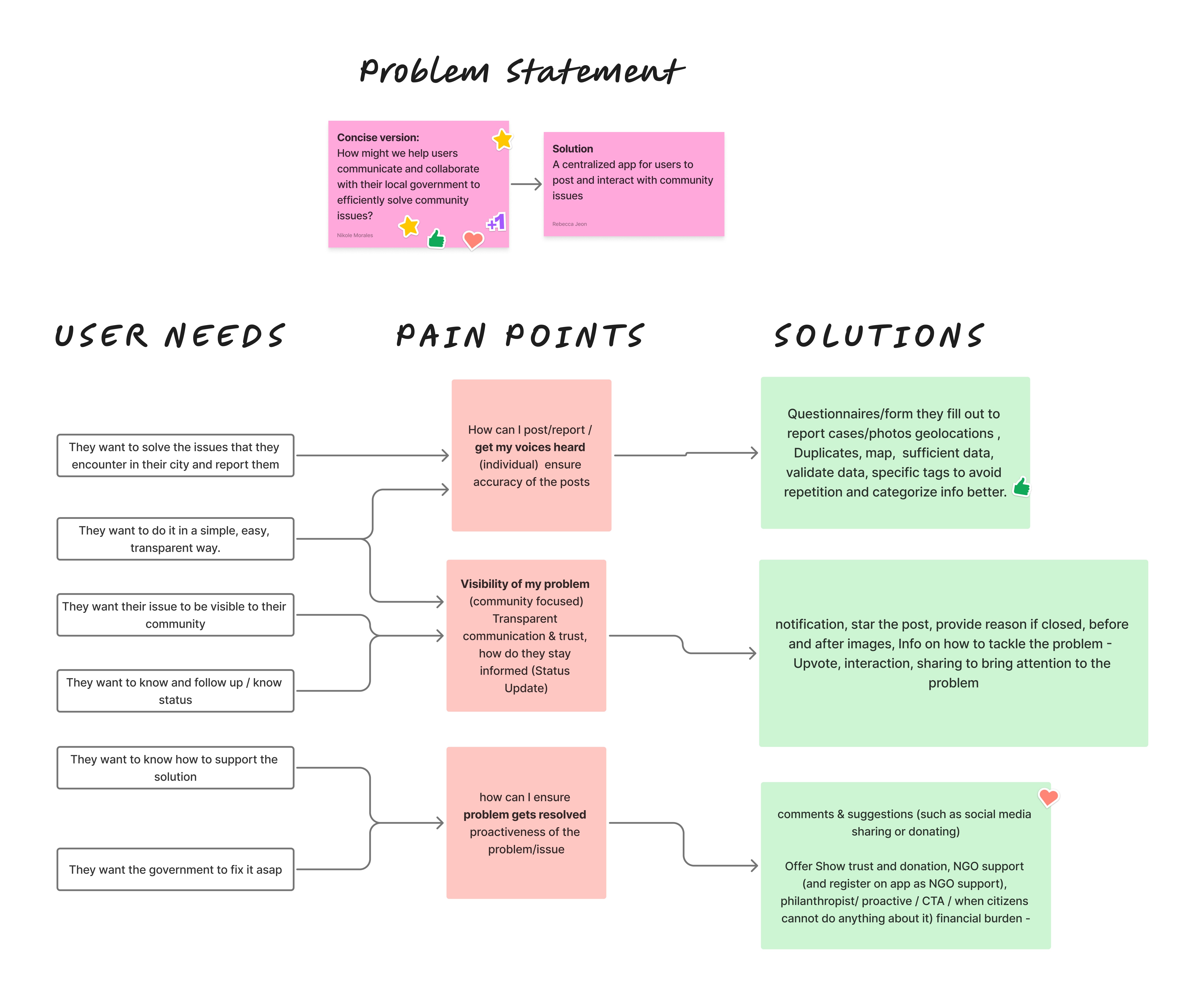
We brainstormed solutions against each pain point, wrote and selected a single “How might we,” then mapped user needs → pain points → solutions to keep scope tight under sprint time.

Finalized problem framing and solutions

Problem Statement

How might we help users communicate and collaborate with their local government to efficiently solve community issues?

Prototype

Our interpretation leaned community-forward (not just a 311 intake form): reporting is necessary, but engagement mechanics and visibility are what keep the system alive.


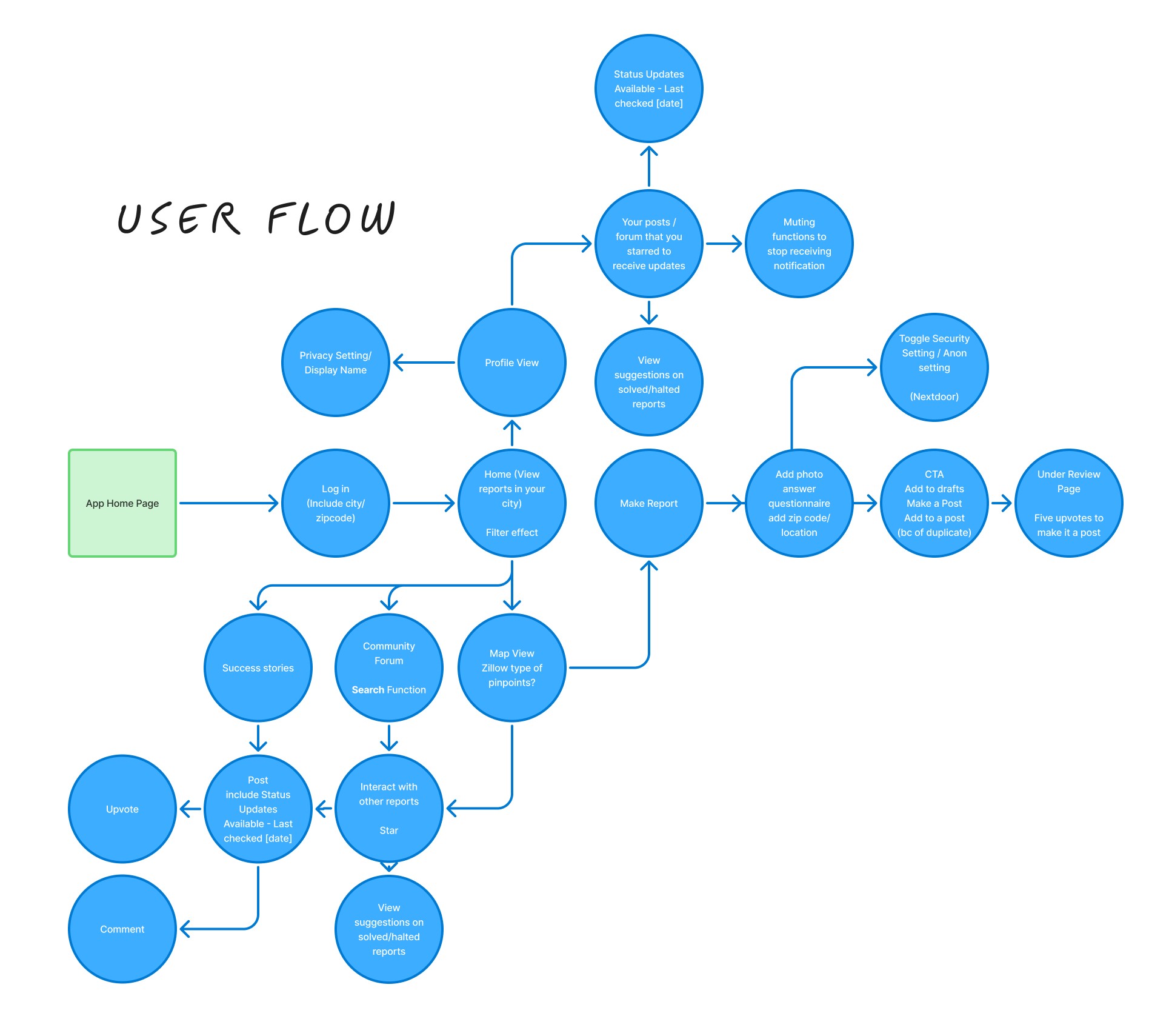
We mapped the end-to-end flow, sketched wireframes, built a lo-fi prototype, and ran two feedback rounds to tighten clarity around reporting and status comprehension. Then we moved into hi-fi.

User flow

Final Design Solution

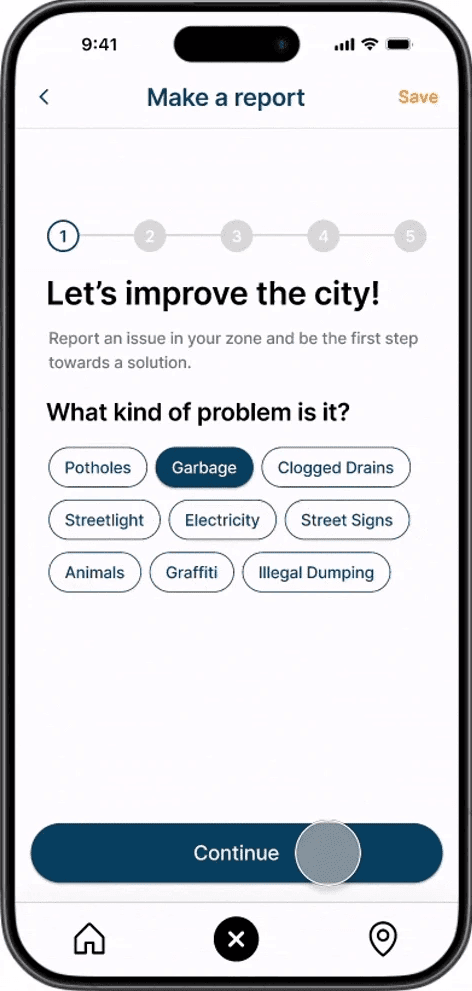
Reporting Questionaire

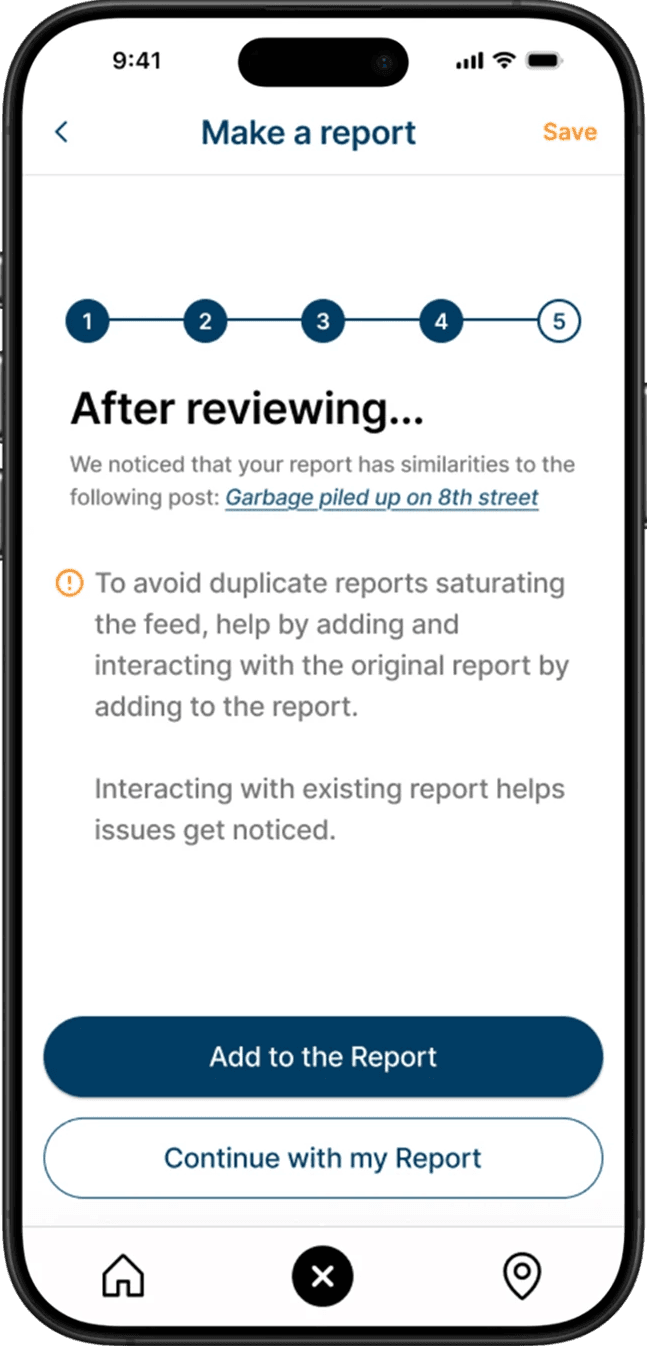
Repeated Report

Pain point 1: “How can I report and have my voice be heard?

We used guided questionnaires to force high-quality inputs (category, location, photo evidence, descriptions) so reports are actionable instead of vague.

To prevent duplicates, the flow checks for similar reports and lets the user either review the match or attach their draft under it, keeping signal consolidated instead of fragmenting attention.

Pain point 2: “How do I stay updated about my report?”

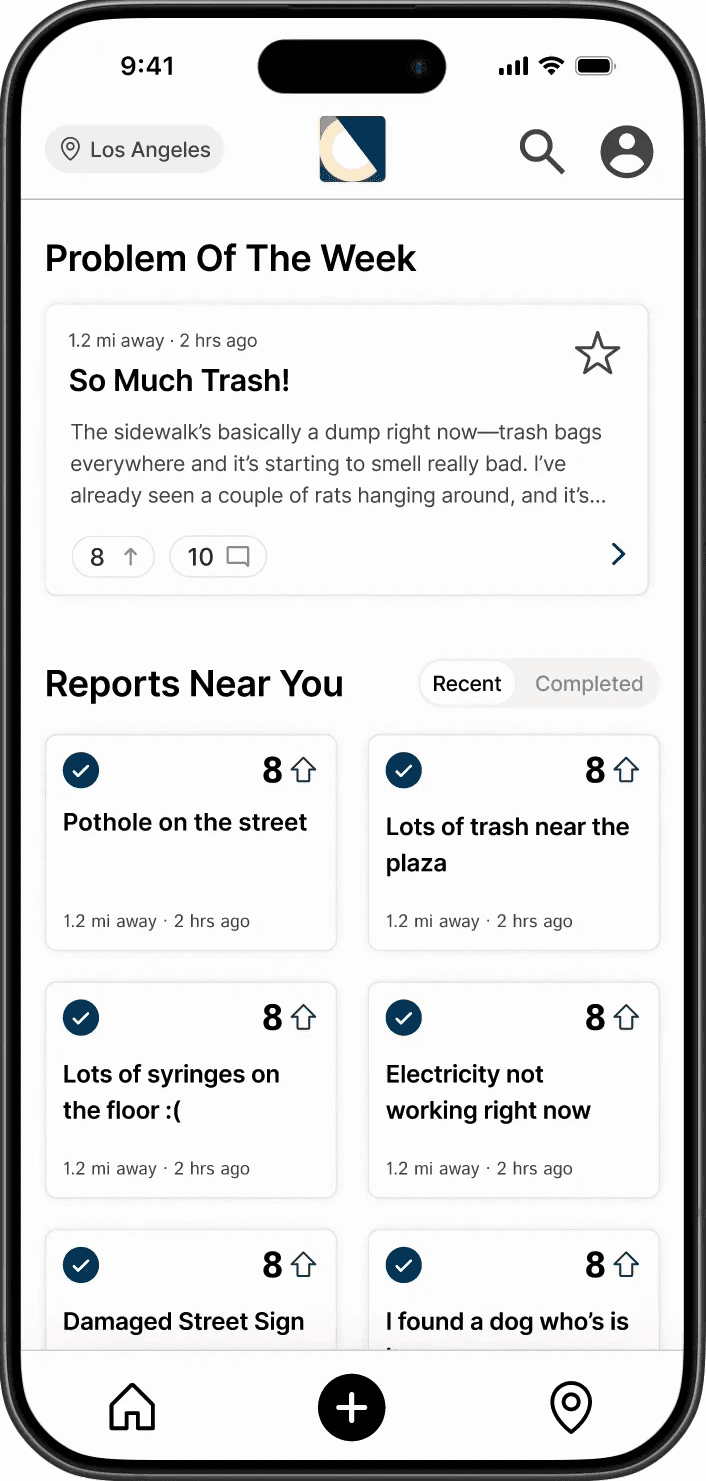
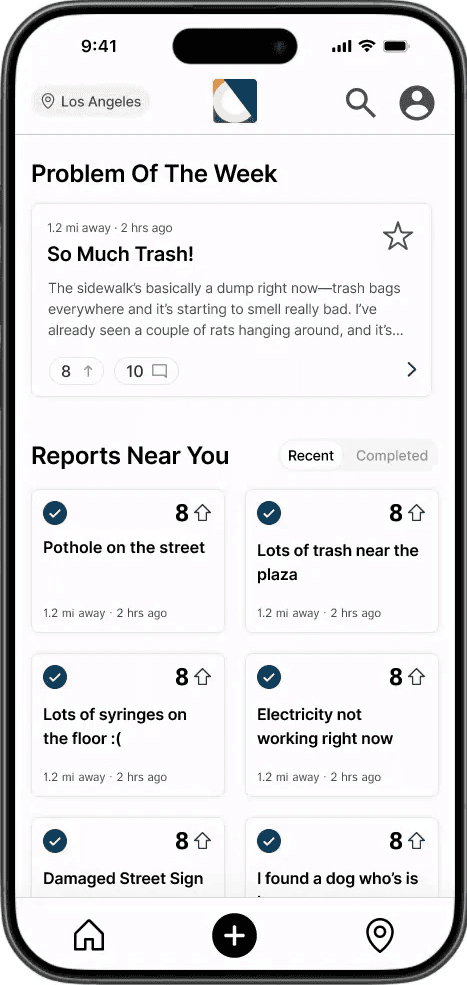
We added online interactions such as upvotes and comments to increase issue visibility and help indicate priority, plus a favorite mechanism so users choose what they want notifications for.

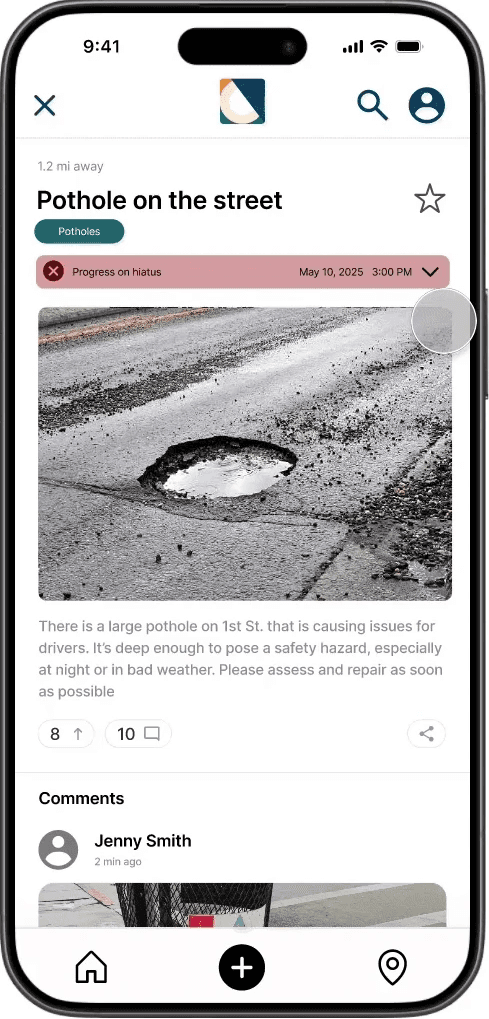
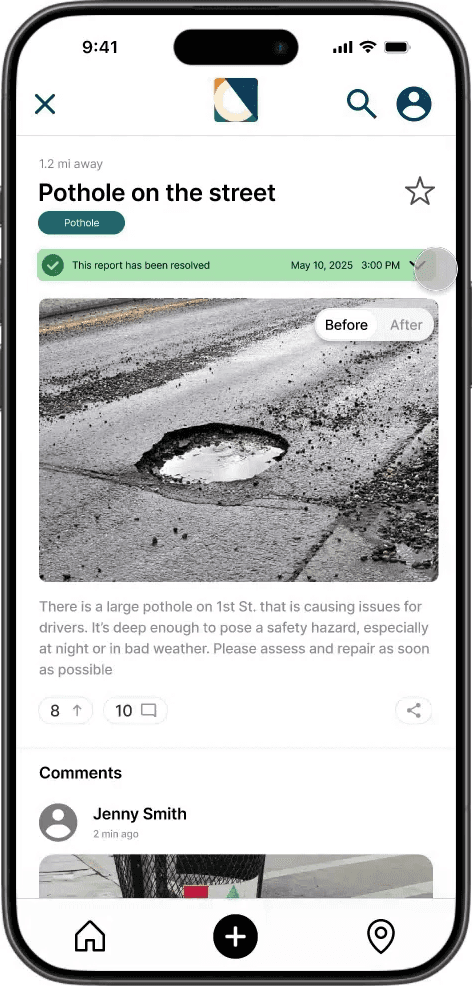
For closure and trust, status updates include richer details when resolved (timeline + comparative photos), and when a report can’t be resolved, the user receives an explanation plus suggested next actions (ex: share or donate) to maintain momentum instead of dead-ending.

Online Interactions

Status: In Progress

Status: Resolved

Map

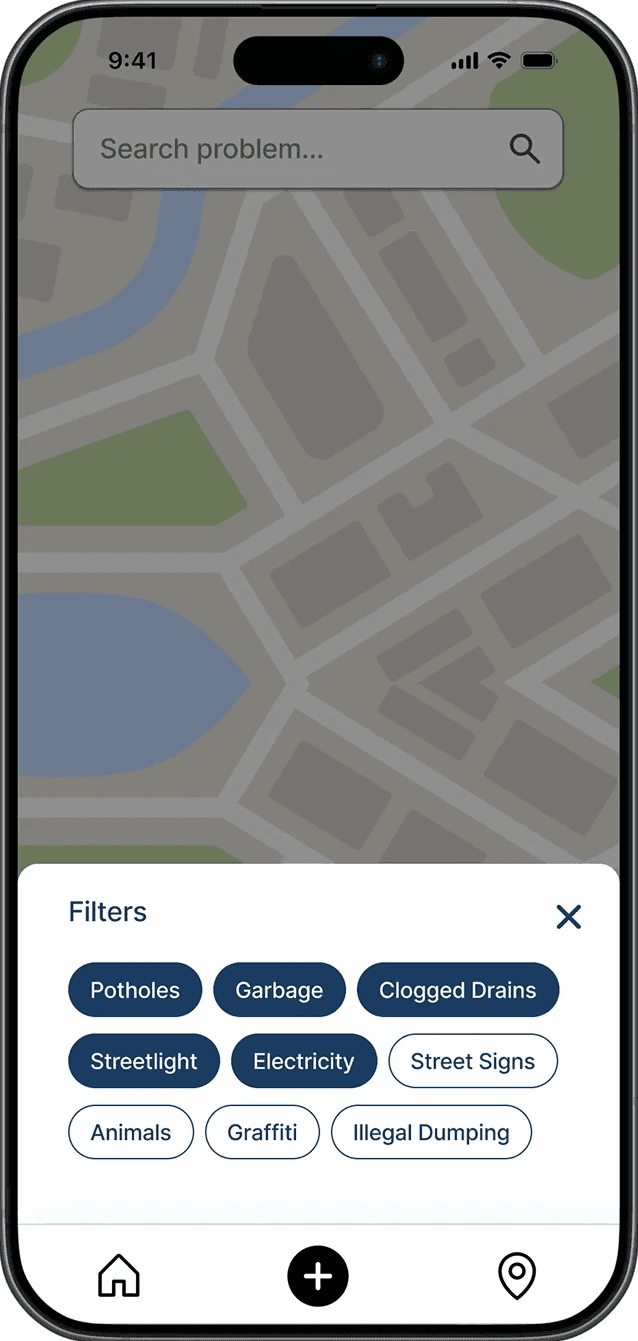
Map: Filter

Pain point 3: “How can I find out what issues are affecting my community?”

Discovery is supported through a community forum-style feed (scrollable list of reports) and a map view that pinpoints issues by location and supports filtering for what matters to the user.

Limitations

This was a sprint build without municipal ops validation, so we didn’t test how well the “cannot be resolved” explanations, prioritization signals, or duplicate matching would perform with real city workflows/data.